


How to become a celebrant UK is a question many people ask when they discover the rewarding world of personalised weddings, funerals, naming ceremonies and other important life events. Unlike many traditional professions, celebrancy can attract people from a wide range of backgrounds, including teaching, events, hospitality, customer service, public speaking and business.
A celebrant helps people create meaningful ceremonies that reflect their personalities, relationships and individual circumstances. The role combines communication, organisation, writing, empathy and confidence, making it an appealing career option for someone who enjoys working closely with people.
What Does a Celebrant Do?
A celebrant plans and conducts personalised ceremonies for clients. Depending on their area of specialism, they may work with couples planning weddings, families arranging funerals or parents organising naming ceremonies.
The work often involves meeting clients, listening carefully to their stories, preparing scripts, discussing readings and music, organising ceremony timings and delivering the final ceremony. Celebrants may also provide practical guidance about venues and explain how their ceremony fits alongside legal requirements.
Because every client is different, the work is rarely repetitive. One week could involve writing a wedding ceremony, while another might involve preparing a thoughtful funeral tribute.
Do You Need a Qualification to Become a Celebrant in the UK?
One of the most important things to understand is that there is no single mandatory celebrant qualification for entering the profession. The National Careers Service states that formal qualifications are not required, although private training can help improve career prospects.
However, choosing professional training can be a sensible step for beginners. A good course can teach ceremony structure, public speaking, client communication, writing techniques, business skills and practical considerations.
Training options vary considerably. Some providers specialise in weddings, while others focus on funerals or offer broader celebrancy programmes covering several types of ceremony.
Step 1: Decide What Type of Celebrant You Want to Be
Before choosing a course, consider the type of ceremonies you would like to conduct.
Wedding Celebrant
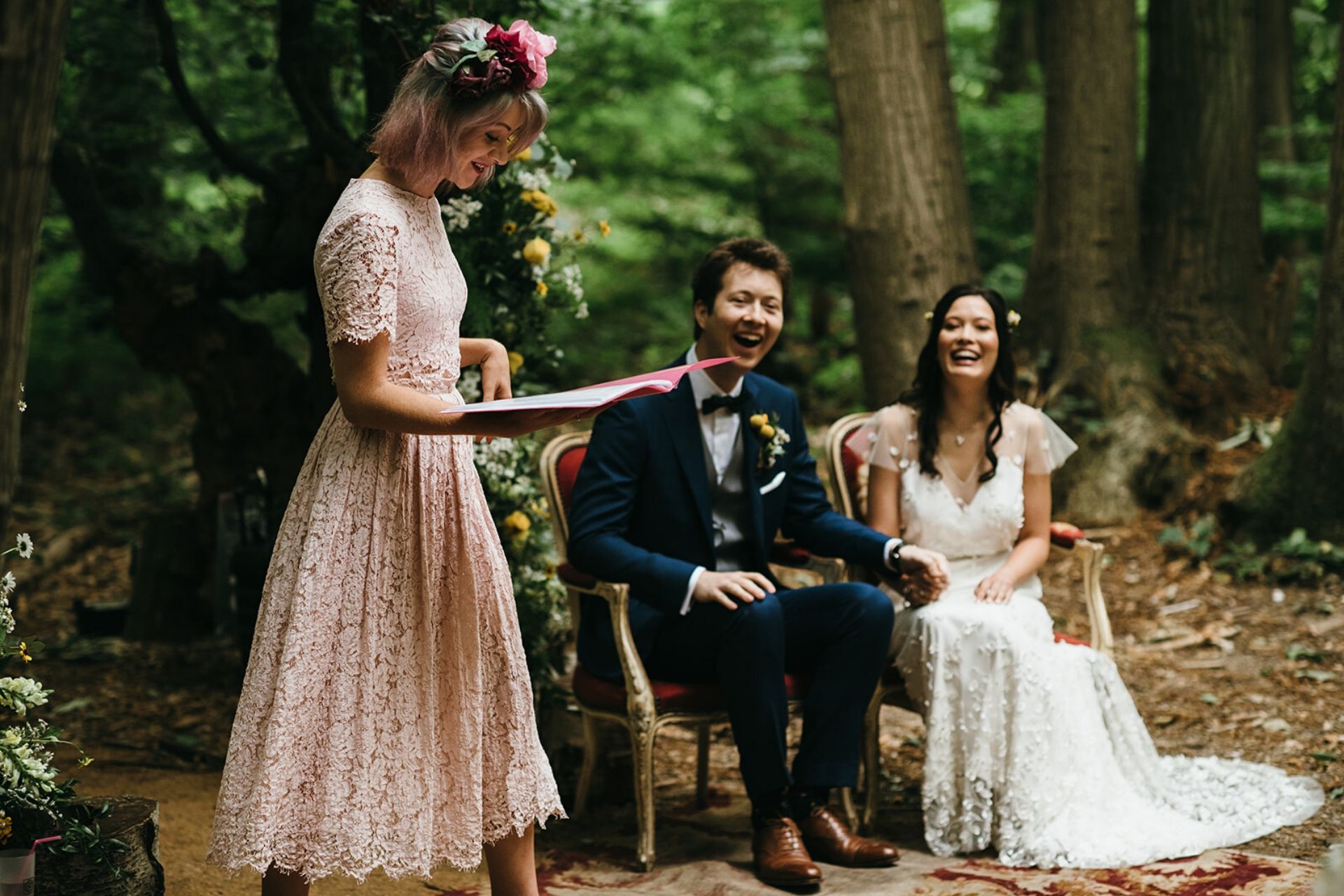
Wedding celebrants work with couples to create personalised ceremonies that can include stories, vows, readings, symbolic rituals and other meaningful elements.
Funeral Celebrant
Funeral celebrants work closely with families to create respectful ceremonies that reflect the life and personality of someone who has died. This requires particular sensitivity, listening skills and emotional maturity.
Naming Celebrant
Naming ceremonies can celebrate the arrival or development of a child and provide families with an opportunity to create a personal ceremony around their values and relationships.
Some experienced celebrants eventually work across several ceremony types, which can provide greater variety and help reduce dependence on one particular market.
Step 2: Develop the Skills Successful Celebrants Need
Being comfortable speaking in front of people is useful, but it is only one part of the job.
A successful celebrant also needs strong listening and writing skills. Clients often provide personal stories and emotional details, and the celebrant must turn those conversations into a ceremony that feels authentic rather than generic.
Organisation is equally important. Celebrants may need to manage meetings, questionnaires, drafts, venue information, ceremony schedules and client communications.
The National Careers Service highlights skills including sensitivity, verbal communication, customer service, leadership, initiative, active listening and business management.
Step 3: Choose Suitable Celebrant Training
Once you know your preferred ceremony type, compare training providers carefully.
Look at what each course actually teaches rather than choosing purely on price. Useful areas can include ceremony writing, public speaking, client meetings, legal considerations, business development, marketing and practical ceremony delivery.
For example, Humanists UK offers dedicated training routes for wedding and funeral ceremonies, with structured stages covering induction, general skills and technical training.
Independent training providers also offer wedding, funeral and combined celebrant courses in different formats, including online and in-person options.
The right course depends on your goals, available time, budget and the type of celebrancy you want to practise.
Step 4: Understand the Legal Side of Celebrancy
This is an area where new celebrants need to be particularly clear with clients.
A celebrant-led ceremony and the legal marriage process are not necessarily the same thing. In England and Wales, couples must follow the legal requirements for marriage separately, including giving notice and meeting the requirements associated with the chosen legal ceremony.
A professional celebrant should therefore understand the difference between creating a personalised celebration and completing the legal formalities of marriage.
Being able to explain this clearly helps clients make informed decisions and prevents confusion about what their ceremony legally represents.
Step 5: Build Your Celebrant Business
Many celebrants work on a self-employed basis and develop their own personal brand.
This means the career involves more than simply delivering ceremonies. You may need to create a website, establish social media profiles, prepare service packages, communicate with enquiries, manage bookings and promote your work.
A professional online presence is particularly useful because prospective clients often want to understand your personality and approach before making contact.
Your website could include:
- An introduction and professional biography
- Wedding or funeral services
- Ceremony packages
- Frequently asked questions
- Testimonials
- Areas you cover
- A contact form
- Helpful articles about celebrancy
Step 6: Start Building Experience
Your first ceremony may feel intimidating, especially if you have never spoken at a major event professionally.
Start by practising your delivery and writing skills. You can develop sample ceremonies, practise introductions and endings, work on pacing and become comfortable speaking naturally rather than simply reading words from a page.
Networking can also be valuable. Depending on your specialism, you may develop relationships with wedding venues, photographers, planners, funeral directors and other professionals.
The aim is to become known as someone who is dependable, professional and easy to work with.
Step 7: Market Your Celebrant Services
Once your training and basic business setup are ready, marketing becomes an important part of building your career.
Local SEO can be particularly useful. Instead of targeting only broad phrases such as “celebrant UK”, you could create useful pages around specific services and locations, such as wedding celebrant services in your area or funeral celebrant information for local families.
Social media can also help potential clients understand your style. Rather than posting only promotional messages, share useful information about ceremony planning, vows, readings, personalised ceremonies and common client questions.
Over time, informative content can help establish your reputation and generate enquiries.
Is Celebrancy a Good Career Choice?
Celebrancy can be rewarding for people who enjoy storytelling, communication and helping others mark important moments.
It can also offer flexibility because many celebrants operate independently and organise their own workload. However, it should not be viewed as an effortless career. Building a reputation takes time, and income can vary according to experience, location, ceremony type, demand and the number of bookings secured.
The National Careers Service notes that celebrant working hours and income can be variable, with many working as contractors or self-employed professionals.
Final Thoughts
Learning how to become a celebrant UK is less about finding one compulsory qualification and more about developing the right combination of training, communication skills, empathy, organisation and business knowledge.
Start by deciding which ceremonies interest you most, research suitable training, understand the relevant legal distinctions and gradually build your professional presence. With patience and consistent networking, content marketing and excellent client service, celebrancy can develop into a meaningful independent career.
Most importantly, remember that people choose celebrants because they want ceremonies that feel personal. The ability to listen carefully, tell someone’s story with authenticity and create a calm, memorable experience can ultimately be more valuable than simply having a certificate.












KUWIN
Xin chào, kuwin hiện là nền tảng chất lượng với giao diện đẹp.
Kho game đa dạng từ game bài, nạp rút nhanh.
Mình cảm thấy rất ổn, ai đang tìm nhà cái thì đăng
ký ngay nhé! KUWIN