

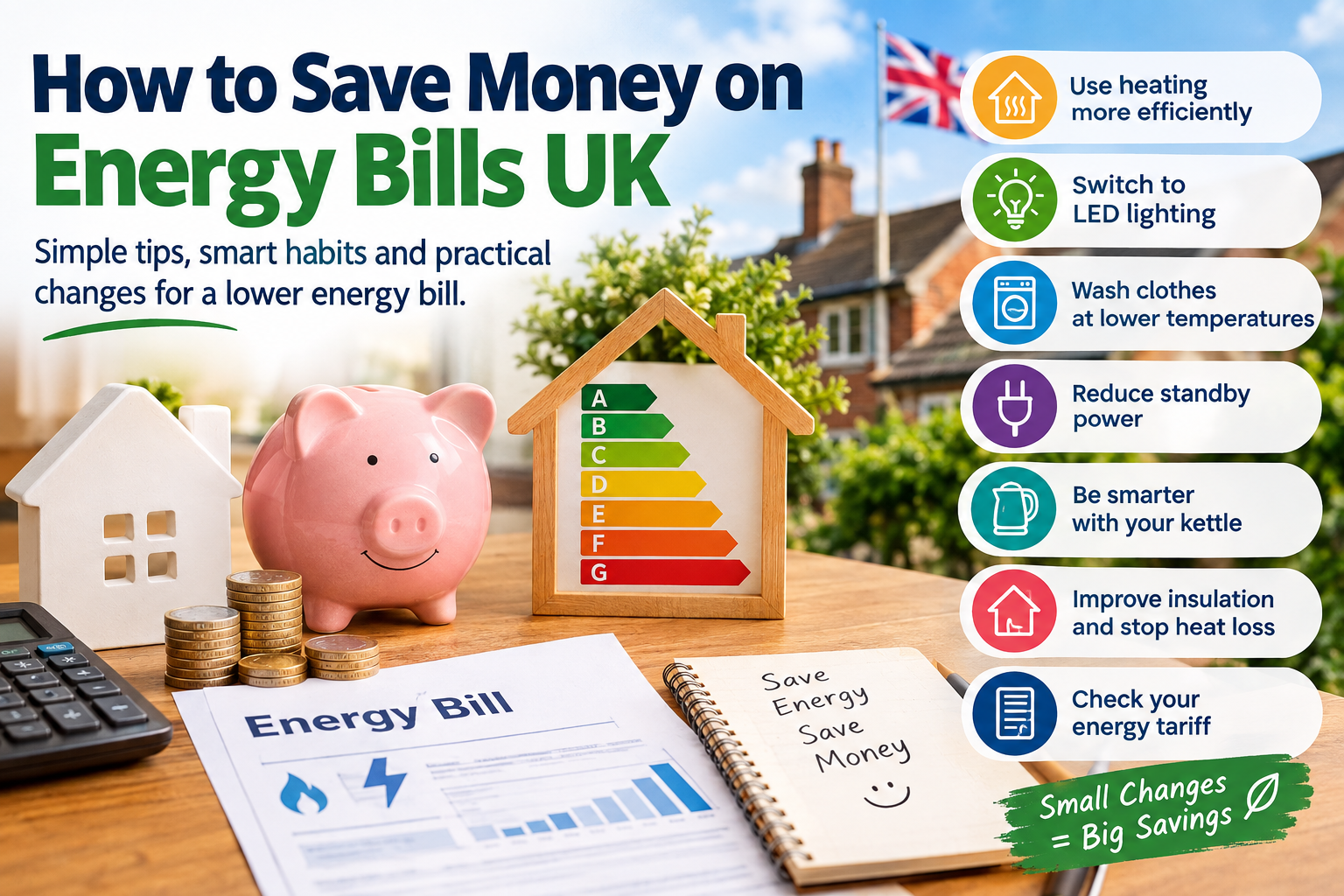
How to save money on energy bills UK is a question many households are asking as people look for practical ways to reduce everyday costs without sacrificing comfort. The good news is that you do not always need expensive home improvements to make a difference. Small changes to heating, appliances, lighting and water use can gradually reduce household energy consumption.
1. Make Your Heating More Efficient
Heating and hot water account for a significant share of household energy use, so this is one of the best places to start. Energy Saving Trust recommends using heating controls effectively and keeping your thermostat at the lowest comfortable temperature. For many households, around 18–21°C can provide a reasonable balance between comfort and energy use.
Use your programmer or timer to heat the home when you actually need it rather than leaving the heating running unnecessarily. Thermostatic radiator valves can also help you control temperatures in individual rooms.
2. Reduce Standby Energy
Leaving televisions, games consoles, computers and other appliances on standby can add unnecessary electricity use.
Make a habit of switching appliances off at the plug when they are not needed. Energy Saving Trust estimates that switching off standby appliances can save around £45 a year in Great Britain.
However, avoid switching off appliances that need continuous power, such as refrigerators and freezers.
3. Use Your Washing Machine Wisely
Laundry can become surprisingly expensive when a washing machine runs frequently at high temperatures.
Where suitable for your clothes, choose a 30°C wash and try to reduce unnecessary cycles. Energy Saving Trust estimates that using the washing machine less and washing at lower temperatures could save around £26 per year in Great Britain.
Running full loads instead of several small washes can also make your routine more efficient.
4. Limit Tumble Dryer Use
Tumble dryers are convenient, but they can consume considerable electricity.
Whenever practical, dry clothes outdoors or use an indoor drying rack in a well-ventilated space. Energy Saving Trust estimates that avoiding tumble-dryer use can save around £50 a year in Great Britain, depending on usage.
This simple habit can be particularly useful during warmer months.
5. Be Smarter With Your Kettle
The kettle is one of the most frequently used appliances in many UK kitchens. Filling it with more water than necessary means using electricity to heat water you will not use.
Only boil the amount of water you need. Energy Saving Trust estimates that avoiding overfilling the kettle could save around £10 a year in Great Britain.
It may seem like a tiny change, but repeated small savings can add up over the year.
6. Switch to LED Lighting
Turning lights off when you leave a room is an easy way to reduce unnecessary electricity consumption. Replacing older bulbs with LEDs can also improve efficiency.
LED bulbs generally use less electricity than older lighting technologies and can last longer. If you are gradually replacing bulbs around the house, choosing efficient LEDs is a practical long-term step.
7. Reduce Hot Water Waste
Heating water uses energy, so changing your daily water habits can help lower household costs.
Shorter showers, efficient shower heads and avoiding unnecessary hot water can all make a difference. Energy Saving Trust estimates that keeping showers to around four minutes could save approximately £45 a year in Great Britain.
You can also avoid leaving hot taps running when warm or cold water is not required.
8. Stop Heat Escaping From Your Home
A home that loses heat quickly needs more energy to stay warm. Draught-proofing gaps around suitable windows and doors can therefore improve comfort while reducing heating demand.
Loft, cavity-wall and other insulation improvements can provide bigger long-term benefits. GOV.UK also provides an online service that can give homeowners in England and Wales personalised recommendations based on their property’s characteristics.
If you rent your home, focus first on changes that do not require major alterations or landlord approval.
9. Check Your Energy Tariff
Reducing consumption is only part of the solution. It is also worth checking whether your current energy tariff remains competitive.
Energy Saving Trust recommends reviewing your tariff and considering available alternatives. Your supplier may offer different tariffs, while comparison services can help you assess other options.
Always check the full terms, rates and any fees before switching.
10. Use a Smart Meter to Monitor Usage
A smart meter can help you understand how much energy your household is using. Seeing consumption in near real time can make it easier to identify habits that are increasing your bills.
For example, you may discover that heating, laundry or certain appliances are responsible for more usage than expected. Your energy supplier can provide information about smart-meter installation.
11. Consider Energy-Efficient Appliances
When an appliance needs replacing, look beyond the purchase price. Energy efficiency can affect its running cost over many years.
Energy Saving Trust recommends checking energy labels when choosing new appliances and considering the size of the appliance as well as its efficiency rating.
A suitably sized efficient appliance may provide better value over its lifetime than simply choosing the cheapest model.
12. Look for Available UK Energy Support
Some households may qualify for energy grants, financial assistance or schemes designed to improve home energy efficiency. Eligibility varies depending on where you live, your circumstances and whether you own or rent your property.
Energy Saving Trust maintains information about financial support available across the UK, while GOV.UK provides further guidance for eligible households and home improvements.
Final Thoughts
Learning how to save money on energy bills UK households face does not have to involve making dramatic changes overnight. Start with simple habits such as reducing standby power, washing clothes at lower temperatures, limiting tumble-dryer use and managing heating more carefully.
Once these habits become routine, consider bigger improvements such as insulation, better heating controls and efficient appliances. The most effective approach is to combine everyday energy-saving behaviour with sensible long-term improvements, helping your home become more efficient while keeping unnecessary costs under control.















Leave a Reply