

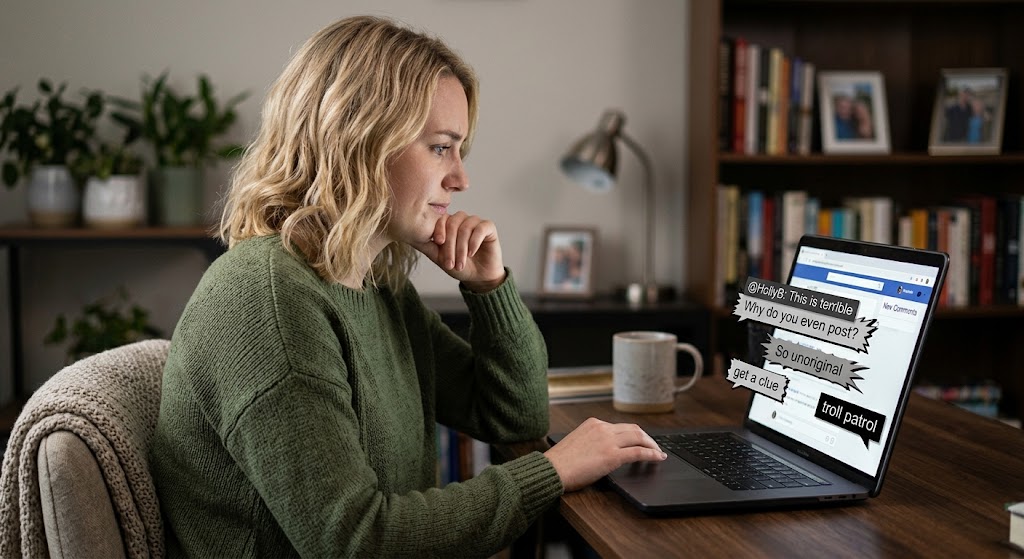
Holly Braithwaite social media trolls have brought renewed attention to the way public-facing creators can experience criticism and abuse online. In 2026, the UK fitness coach spoke publicly after receiving hostile comments while sharing content related to her training for a Hyrox event. Reports said that the comments included criticism of her appearance and training, with some messages becoming threatening.
Who Is Holly Braithwaite?
Holly Braithwaite is known online for fitness and lifestyle content. Her social-media presence includes training, exercise and aspects of everyday life. Her recent experience has highlighted a familiar challenge for people who regularly share their lives on public platforms: the difference between legitimate criticism and personal abuse.
Social media allows creators to communicate directly with large audiences, but that visibility can also attract unwanted attention. A post that takes only seconds to create can generate hundreds of reactions, ranging from supportive messages to highly personal criticism.
What Happened With the Social Media Trolls?
According to UK reports, Braithwaite faced a wave of negative comments after posting videos connected with her outdoor training. She had been preparing for a Hyrox competition and shared parts of that preparation online.
Some of the criticism focused on her decision to exercise outdoors, while other comments targeted her appearance. Reports also described threatening messages, showing how online criticism can sometimes move beyond ordinary disagreement.
Braithwaite said she had learned over time to deal with negative comments and now removes abusive messages while keeping screenshots in case the people involved return.
Why Do Social Media Trolls Attract So Much Attention?
Online trolling is not a new phenomenon, but social platforms have made it easier for conversations to spread quickly. Public figures, influencers and content creators can receive reactions from people they have never met.
The problem becomes more complicated when criticism turns into insults, harassment or threats. Constructive feedback can be useful, but personal attacks rarely contribute to a meaningful discussion.
The experience associated with Holly Braithwaite has therefore become part of a wider conversation about how people behave behind screens.
The Pressure on Women Online
Women who share fitness, fashion, lifestyle or personal content can face particularly personal comments about their appearance and choices.
Instead of discussing the actual content of a post, online conversations can quickly shift towards someone’s body, parenting decisions, lifestyle or personality. This can create additional pressure for women who use social media professionally or simply enjoy sharing their interests.
Braithwaite’s comments have highlighted the importance of recognising that having a public profile does not mean someone should automatically accept abusive behaviour.
Social Media Criticism vs Online Abuse
There is an important difference between criticism and harassment.
A person can disagree with a fitness routine, question an opinion or offer constructive feedback without attacking the individual. Healthy online discussion depends on keeping that distinction clear.
Personal insults, repeated harassment and threatening messages are different from ordinary disagreement. For creators, learning to identify this difference can make managing online communities easier.
How Can Creators Deal With Online Trolls?
Creators facing negative attention can take several practical steps:
- Use comment filters and moderation tools.
- Block accounts that repeatedly post abusive messages.
- Avoid engaging with deliberately provocative comments.
- Keep screenshots of threatening or persistent harassment.
- Report content that violates platform rules.
- Review privacy and security settings regularly.
- Seek support from trusted people when online abuse becomes overwhelming.
These steps cannot prevent every negative comment, but they can reduce unnecessary exposure and help creators maintain healthier online spaces.
A Wider Lesson for Social Media Users
The discussion surrounding Holly Braithwaite social media trolls also raises a broader question: what should online behaviour look like?
People may forget that there is a real person behind a profile. A comment written casually can have a much greater impact when it becomes part of a large stream of criticism.
The simplest principle is often the most useful one: disagreement does not require disrespect.
The Future of Online Fitness Content
Fitness creators are likely to remain an important part of social media culture. Platforms such as Instagram, TikTok and YouTube allow trainers and enthusiasts to share workouts, motivation and personal experiences with audiences across the UK and beyond.
At the same time, the growth of creator culture makes responsible online communication increasingly important. Audiences can choose what they watch, while creators can establish boundaries around the conversations they are willing to participate in.
Holly Braithwaite’s experience provides a current example of this wider challenge. Her decision to continue training and creating content despite negative attention demonstrates how online criticism can become a discussion about resilience, boundaries and respectful digital behaviour.
Final Thoughts
The story surrounding Holly Braithwaite social media trolls is about more than one fitness creator or one group of online comments. It reflects a much broader issue facing people who share content publicly.
Social media works best when criticism remains constructive and personal abuse is not treated as normal. For creators and audiences alike, setting boundaries and communicating respectfully can help make online communities more positive and sustainable.







tkslot
I just like the valuable info you provide on your articles.
I will bookmark your weblog and test again right here
frequently. I am quite sure I will be told a lot of new stuff
right right here! Good luck for the next!