

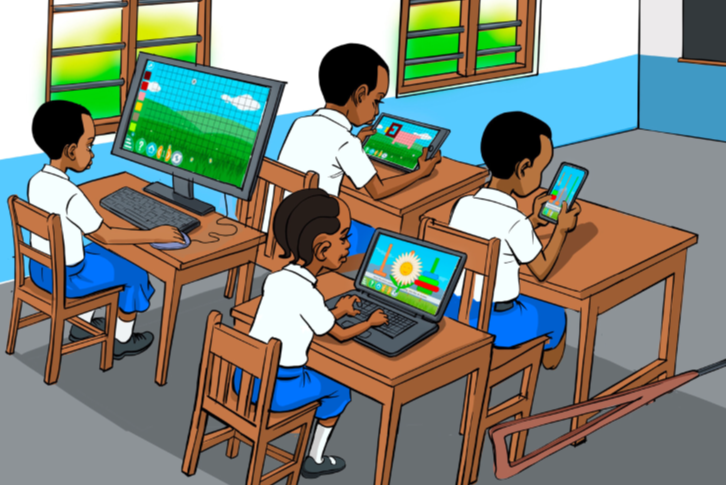
ICT games are rapidly transforming how primary school children in the UK engage with foundational subjects, turning screen time into productive learning hours. From mastering early years phonics to grasping basic coding concepts, interactive digital play has evolved from a classroom distraction into an essential educational tool.
As primary schools across the UK continuously adapt to modern curriculum demands, teachers and parents alike are looking for ways to make learning stick. ICT games Traditional rote memorization is taking a backseat to gamified learning.
Here is a deep dive into why these digital resources are a game-changer for young learners and how to choose the best ones for your child or classroom.
The Power of Gamified Learning in Key Stage 1 & 2
Children learn best ICT games when they are actively engaged, not just passively consuming information. Gamification introduces elements like points, levels, and instant feedback, which trigger a natural desire to improve and succeed.
-
Active Engagement: Instead of looking at a whiteboard, kids are clicking, dragging, and solving puzzles.
-
Immediate Feedback: If a child gets a math problem wrong in a game, they instantly know and can try again, reducing the anxiety of failure.
-
Skill Progression: Most educational games automatically adjust their difficulty based on the player’s performance, ensuring they are always challenged but never frustrated.
Core Subjects Transformed by Digital Play
You don’t have to look far to see the impact of interactive play across core subjects in the UK national curriculum:
1. Mathematics & Numeracy
Maths can be intimidating for many young minds. However, online games turn abstract numbers into concrete, visual challenges. Whether it is counting virtual objects, practicing times tables through speed trials, or learning fractions by cutting digital pizzas, math games build solid conceptual foundations.
2. English & Phonics
For early readers, phonics games are invaluable. Matching sounds to letters, blending words to help a character jump across a river, or spelling words to build a bridge makes the difficult process of learning to read feel like an adventure.
3. Basic Computing & Logic
ICT isn’t just a medium for learning other subjects; it is a subject in itself. Simple logic games and block-based puzzle solving introduce children to the fundamentals of computational thinking, algorithms, and sequencing long before they write their first line of actual code.
What Makes a Great Educational Game?
Not all screen time is created equal. When searching for resources for your classroom or home, look for these key indicators of quality:
-
Curriculum Alignment: The best resources explicitly state which parts of the UK National Curriculum (KS1 or KS2) they support.
-
Ad-Free Environments: Children should be able to play in a safe online space without intrusive ads or accidental micro-transactions.
-
No Flash Requirements: Ensure the platform runs on modern HTML5 so it works smoothly on school iPads, Chromebooks, and tablets.
-
Intuitively Designed UI: Simple navigation is crucial. If a 6-year-old cannot figure out how to start the game on their own, the design has failed.
-
Balancing Screen Time and Study
The goal of integrating digital games into education is not to replace physical books, outdoor play, or pencil-and-paper practice. Instead, they serve as a powerful supplement. When used mindfully—perhaps as a 15-minute reward at the end of a lesson or a fun weekend review session—interactive digital tools make learning an enjoyable habit that children actively look forward to.











Leave a Reply