

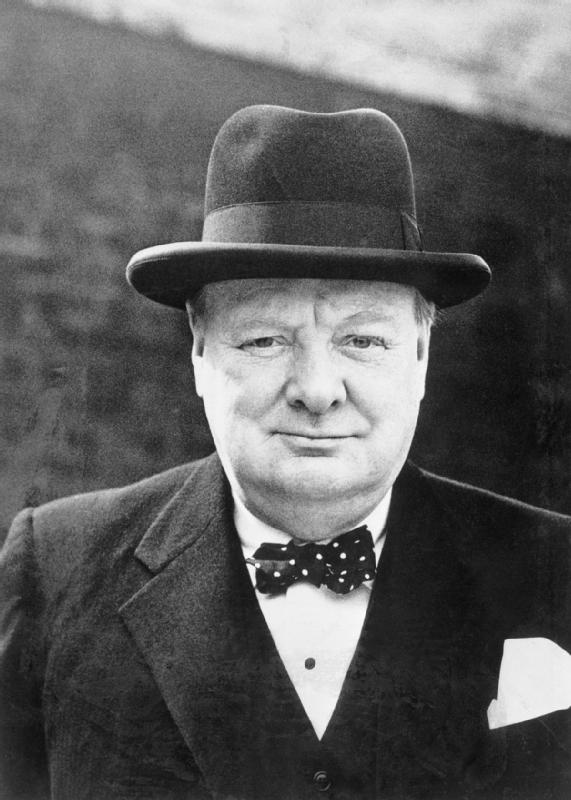
A comprehensive Winston Churchill biography reveals the life of a statesman whose leadership dramatically reshaped twentieth-century global history. Sir Winston Leonard Spencer Churchill remains one of the most celebrated political figures in United Kingdom history, best remembered for guiding Britain through the perilous years of the Second World War with unyielding determination and eloquence.
Early Life and Military Career
Born on 30 November 1874 at Blenheim Palace, Oxfordshire, Winston Churchill was a descendant of the aristocratic Spencer-Churchill family. After attending Harrow School, he pursued a career in the military, graduating from the Royal Military College, Sandhurst.
During his early military service, Churchill served in several key campaign regions across the British Empire:
-
Malakand Field Force (1897): Served on the North-West Frontier.
-
Sudan (1898): Participated in the Battle of Omdurman as both an officer and war correspondent.
-
Second Boer War (1899–1900): Gained national fame after making a dramatic escape from a prisoner-of-war camp in South Africa.
His vivid journalistic accounts of these military actions established his reputation as a writer and public figure before he entered parliamentary politics.
Political Career and the Political Wilderness Years
Churchill was elected to the House of Commons in 1900 as the Conservative Member of Parliament for Oldham. Over the following decades, his political journey saw notable shifts, including switching to the Liberal Party in 1904 before eventually rejoining the Conservatives in 1924.
Before his historic wartime premiership, Churchill held several top Cabinet posts:
-
Home Secretary (1910–1911): Focused on prison reforms and law enforcement.
-
First Lord of the Admiralty (1911–1915): Modernised the Royal Navy prior to World War I.
-
Chancellor of the Exchequer (1924–1929): Returned Britain to the Gold Standard.
During the 1930s—often referred to as his “Wilderness Years”—Churchill lost his official government posts. However, he maintained a vocal stance warning the British public and Parliament about the rising threat of Nazi German rearmament.
World War II Leadership and National Icon
On 10 May 1940, as World War II escalated across Western Europe, King George VI appointed Churchill as Prime Minister of the United Kingdom. Heading a wartime coalition government, Churchill’s resolve became pivotal during Britain’s darkest hours.
Key aspects of his wartime leadership included:
-
Oratory and Speeches: Delivered iconic radio broadcasts featuring famous lines such as “We shall fight on the beaches” and “Their finest hour”, sustaining national morale.
-
Strategic Alliances: Forged vital diplomatic relationships with US President Franklin D. Roosevelt and Soviet leader Joseph Stalin (the “Big Three”).
-
Defense Coordination: Served simultaneously as Minister of Defence to directly oversee military strategy.
Post-War Era, Second Premiership, and Legacy
Following the victory in Europe, the Conservative Party lost the July 1945 general election to Clement Attlee’s Labour Party. Churchill became Leader of the Opposition, using his platform to deliver his famous “Iron Curtain” speech in Fulton, Missouri, warning of rising Cold War tensions.
In 1951, Churchill returned to 10 Downing Street for a second term as Prime Minister, serving until his retirement in 1955 due to declining health.
Major Achievements and Honours
-
Nobel Prize in Literature (1953): Awarded for his mastery of historical description and brilliant oratory.
-
Knight of the Garter (1953): Appointed by Queen Elizabeth II.
-
Honorary US Citizenship (1963): Granted by President John F. Kennedy.
Sir Winston Churchill passed away on 24 January 1965 at the age of 90. He was granted a state funeral—one of the largest in global history—attended by representatives from over 100 nations. Today, his legacy stands as a defining cornerstone of modern British political history.





link slot
I love your blog.. very nice colors & theme. Did you design this website yourself
or did you hire someone to do it for you? Plz reply as I’m looking to construct my own blog and would like to find out where u got
this from. thanks